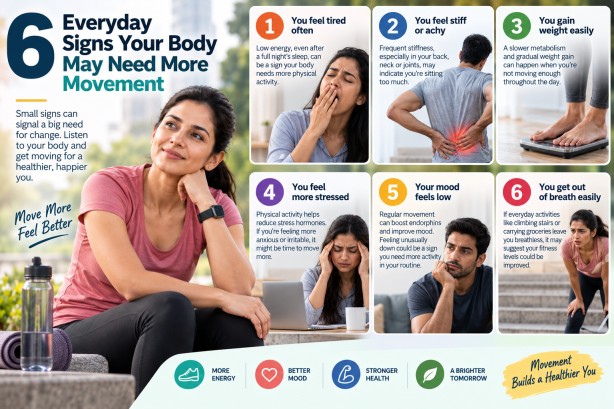
Modern lifestyles often involve long hours of sitting—whether at a desk, in a car, or even relaxing at home. This sedentary behavior can subtly impact one’s flexibility, strength, balance, and energy levels, even before any pain is felt. Early signs that your body needs more movement may surface during daily routines, urging a proactive approach to physical activity before these effects become more pronounced.
One noticeable indicator is stiffness upon standing after extended periods of sitting, affecting the back, hips, shoulders, or legs. Incorporating brief movement breaks throughout the day can help alleviate this stiffness and promote joint comfort. Similarly, feeling unusually fatigued after simple tasks like climbing stairs or short walks might suggest a need to enhance fitness levels. Regular exercise can enhance stamina, making everyday activities less taxing.
Another sign of insufficient movement is a general sense of sluggishness, both physically and mentally, often resulting from prolonged inactivity. Engaging in short walks, stretching, or quick movement breaks can counteract this lethargy, helping to maintain alertness and energy. Additionally, if you find your balance or coordination faltering—such as difficulty standing on one leg or navigating stairs—it could be a cue to focus on exercises that improve stability and strength.
Poor posture, especially the tendency to slump forward while sitting, can also be a result of prolonged inactivity and weak muscles. To combat this, strengthening exercises for the back, legs, and core, along with regular breaks from sitting, can foster better posture and movement. Moreover, if routine movements like bending, squatting, or rising from a chair start becoming challenging, it should not be dismissed as merely aging. Instead, it might indicate a need for more consistent activity to preserve mobility and independence.
Incorporating more movement into your day does not necessarily require lengthy gym sessions. Simple changes, such as taking walking breaks, stretching after sitting, opting for stairs, and performing basic strength or balance exercises, can be effective. Consistency is key; frequent, small movements are often more sustainable than occasional intense workouts. If you experience persistent stiffness, significant weakness, numbness, dizziness, or ongoing pain despite increased activity, consulting a healthcare professional is advisable. Recognizing and responding to these early signs of inadequate movement can support overall strength, energy, and well-being across all ages.