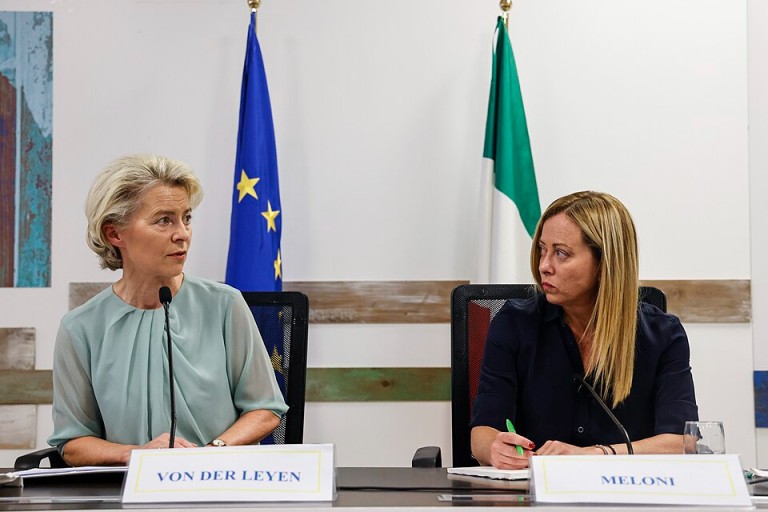
Italian Premier Giorgia Meloni has reached out to the President of the European Commission, Ursula von der Leyen, with a proposal to broaden the current exemptions allowed under the Stability and Growth Pact. Meloni’s letter highlights the need to extend these exemptions, originally meant for defense spending, to also encompass investments aimed at mitigating the effects of the energy price surge caused by the conflict in Iran.
In her correspondence, Meloni emphasized the necessity of expanding the scope of the National Escape Clause. This clause is currently designated for defense investments, but she argues it should also cover measures to tackle the ongoing energy crisis. She cautioned that without this extension, it would be challenging for her government to justify any reliance on the SAFE program, which is the European Union’s framework for providing financial assistance to member states for defense investments.
The European Commission, however, has reiterated its stance on the matter, indicating no change in their position regarding potential suspensions or exemptions from the Stability and Growth Pact. The Commission has communicated a range of options available to member states, which are designed to ensure they operate within fiscally responsible boundaries.
This development comes amidst heightened financial pressures and geopolitical tensions, with European nations grappling with the economic impact of the energy crisis. The Italian government’s call for flexibility in fiscal rules reflects the broader challenges faced by EU countries as they balance economic stability with the urgent need to address rising energy costs.
The outcome of this exchange between Italy and the European Commission remains to be seen, as member states continue to navigate the complexities of fiscal policy and economic recovery in a volatile global environment. The Commission’s response underscores the delicate balance it seeks to maintain between supporting member states and upholding fiscal discipline.