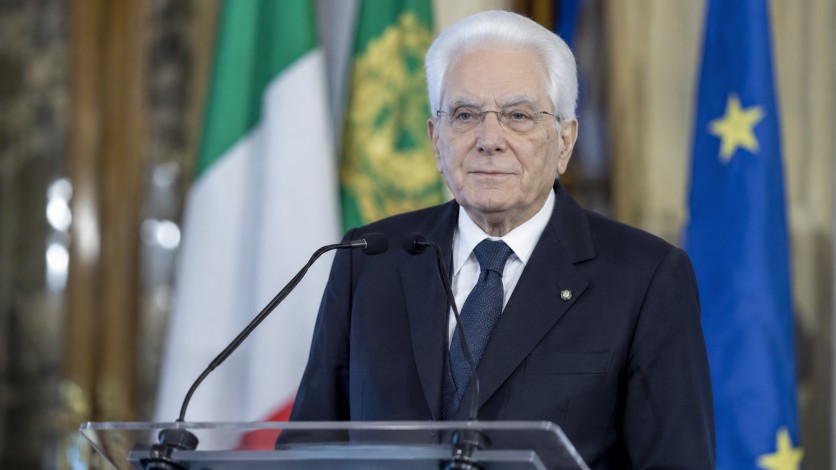
In a move to clarify constitutional powers, Italian President Sergio Mattarella held a meeting with Justice Minister Carlo Nordio, emphasizing that the authority to grant pardons is an exclusive right of the President, as specified in the nation’s Constitution. This assertion comes in response to recent actions by the justice ministry to initiate pardon proceedings for Mario Roggero, a jeweler who was sentenced to 14 years and nine months in prison. Roggero was convicted for shooting and killing two robbers and injuring another during their attempted escape from his shop in 2021.
The case of Mario Roggero has reached a decisive point, as Italy’s Supreme Court recently upheld his sentence, making it final. This high-profile case has stirred significant public and political discourse, with many within the ruling coalition and senior officials urging the consideration of all possible legal avenues to address Roggero’s situation. The debate highlights the tension between judicial decisions and executive powers within the Italian legal system.
President Mattarella’s meeting with Minister Nordio underscores the constitutional framework that assigns the power of granting pardons solely to the President. This framework was reaffirmed by a 2006 ruling from the Constitutional Court, which clearly delineated the President’s exclusive authority in matters of clemency. The clarification from Mattarella seeks to reaffirm this constitutional mandate amidst the ongoing discussions surrounding the jeweler’s case.
The controversy surrounding the pardon proceedings for Roggero has not only engaged legal experts but also captivated public attention, reflecting broader concerns about justice and the limits of self-defense. The incident that led to Roggero’s conviction took place in 2021, when he shot at robbers who were fleeing after a robbery attempt at his jewelry store. The severity of his sentence and the subsequent legal proceedings have sparked a wider debate about the nature of self-defense and the criminal justice system in Italy.
As the debate continues, President Mattarella’s reaffirmation of his constitutional role serves as a pivotal reminder of the separation of powers within Italy’s governmental structure. While the case of Mario Roggero remains a contentious issue, the President’s intervention highlights the importance of upholding constitutional principles in navigating complex legal and moral dilemmas. The evolving situation remains a focal point of public and political interest as stakeholders consider the implications of potential clemency.