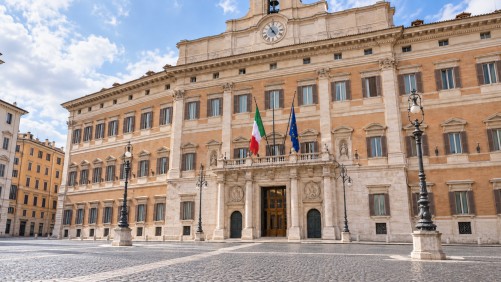
Italy’s parliament has officially passed a contentious electoral reform, sparking significant backlash from opposition parties. This reform, driven by Prime Minister Giorgia Meloni’s government, introduces a proportional electoral system with bonus seats for the coalition that secures the most votes and meets a 42% threshold. Proponents argue it will foster political stability, while critics claim it could unfairly advantage the ruling coalition ahead of the next general election slated for 2027.
The legislative change was approved in a secret ballot by the lower house, with 227 lawmakers in favor and 164 against. The outcome prompted visible protests from opposition MPs, who displayed signs denouncing the legislation and questioning its fairness. They have announced plans to challenge the reform in Italy’s Constitutional Court, underscoring their concerns that the provision may skew voter representation.
Among the contentious elements of the reform is the requirement for political parties and coalitions to disclose their government programs and prime ministerial candidates before the election. Opposition leaders, such as Democratic Party head Elly Schlein, have accused the government of altering electoral rules out of concern for the upcoming election, suggesting that the reform could unduly influence the political landscape by bolstering the leading coalition’s parliamentary representation.
Prime Minister Meloni, however, hailed the parliamentary vote as a sign of unity within her coalition, which includes Brothers of Italy, Forza Italia, and the League. Despite internal tensions and competition from emerging political rivals, her coalition maintains its parliamentary majority.
As Italy looks toward its next general election, polls suggest that a united opposition could potentially reach the 42% threshold required under the new system. However, existing divisions and a lack of consensus on cooperation among opposition parties present significant hurdles.